
You may be a candidate for Endoscopic Foraminotomy
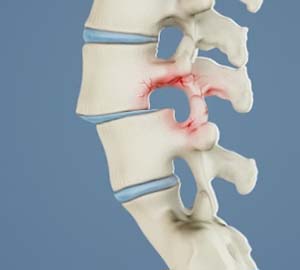
Spondylolisthesis is when one vertebra slips forward over the bone beneath it. It happens most often in the lower back, and it can also occur in the neck and mid back.
The slip itself is rarely the problem. What causes symptoms is what the slip does to the nerves around it, and whether the segment it happened at is still stable.
That distinction decides the treatment. Some patients need the nerve decompressed and nothing more. Others need the segment stabilized. Dr. Issada Thongtrangan treats spondylolisthesis at Microspine in Scottsdale, Arizona, and this page covers how that decision actually gets made.
The two kinds that matter
Degenerative spondylolisthesis. The common one in adults, usually after 50. The disc and facet joints wear down until the segment loses its grip and the vertebra drifts forward. It frequently comes with spinal stenosis, which is what produces the leg symptoms.
Isthmic spondylolisthesis. Caused by a defect or stress fracture in a small piece of bone called the pars. It often starts young and may go unnoticed for decades. It behaves differently from the degenerative kind and is more likely to need stabilizing.
Grades describe how far the vertebra has slipped, from grade 1, the mildest, through grade 4. Most adults who come to the office have a grade 1 or grade 2 slip. A higher grade does not automatically mean surgery, and a low grade does not automatically mean you avoid it.
Symptoms
Symptoms vary with where the slip is and how much the nerves are involved. Some people have none at all.
- Pain or numbness in the buttocks or legs, when the slip is in the lower back
- Weakness in the lower back and in the affected leg
- Difficulty walking or standing for any length of time
- Low back pain that worsens when bending or twisting
- Sciatica, meaning pain traveling down the leg along the sciatic nerve
Trouble usually starts only once the slipped vertebra begins compressing a nearby nerve.
Causes
- A pars fracture or defect, which is what produces isthmic spondylolisthesis
- Disc and facet joint degeneration with age
- Congenital joint defects, genetics and family history
- Sudden injury from manual labor, high-impact sport, a fall or an accident
- Repetitive strain, overuse, or frequent improper lifting
- Arthritis and degenerative disc disease
- Osteoporosis and conditions that weaken bone
When fusion is necessary, and when it is not
This is the question most patients arrive with, and the honest answer is that it depends on one thing: whether the problem is the nerve, or the nerve plus the mechanics.
In October 2026, Becker’s Spine Review asked twelve spine surgeons where the profession is still too quick to fuse. Dr. Thongtrangan’s answer began:
“I think we still fuse too readily for straightforward lumbar stenosis”
He extends that to many stable grade 1 degenerative spondylolisthesis cases. Where there is nerve compression without clear instability, without deformity, and without a major mechanical back-pain component, a tissue-preserving decompression is often enough on its own.
Source: Becker’s Spine Review, “Where spine surgeons draw the line on fusion,” October 5, 2026.
Decompression alone is often enough when:
- The slip is stable and is not progressing
- Leg pain from nerve compression is the dominant complaint
- Back pain from the mechanics of the segment is not the main problem
- There is no significant deformity or spinal imbalance
Fusion is the right answer when:
- The segment is genuinely unstable
- The slip is progressing, meaning it is getting worse over time
- There is significant spinal imbalance or deformity
- Decompressing the nerve would itself destabilize the segment
- The spondylolisthesis is isthmic and has been selected appropriately for stabilization
- It is a revision, meaning a previous operation needs rebuilding
The pendulum swings both ways
Being cautious about fusion is not the same as being against it. A patient with true instability, a progressing slip or real imbalance is not served by the smallest possible operation.
The goal is the least disruptive operation that safely decompresses the nerves when compression is the primary problem, and a proper stabilization when it is not.
Treatment, least invasive first
Conservative care. Tried first wherever the condition allows. Physical therapy to strengthen the muscles supporting the spine, anti-inflammatory and pain-relieving medication, targeted injections, activity modification, and assistive or heat and cold therapies where they help.
Endoscopic decompression. A high-definition camera through an incision a few millimeters wide. Dr. Thongtrangan sees and decompresses the pinched nerve directly, leaving the paraspinal muscles, facet joints and other stabilizing structures intact. That matters more in spondylolisthesis than almost anywhere else, because those structures are what is holding the segment in place.
Minimally invasive fusion. When the segment needs stabilizing, specialized approaches with percutaneous instrumentation allow the spine to be stabilized without a traditional long open fusion. MIS-TLIF is one of these, and it is tailored to the patient. There is no one size fits all.
Why the minimally invasive approach matters:
- Smaller incisions and less scarring
- Substantially less blood loss during surgery
- Shorter hospital stays, with many patients home the same day
- Faster recovery and less reliance on narcotic pain medication afterward
What recovery actually looks like
Hospital stay. 0 to 2 nights for minimally invasive and endoscopic procedures. Many patients leave the same day or the next morning. An overnight stay is typical after a minimally invasive fusion.
Walking. In the hallways within hours of surgery, with the care team.
Driving. Around 2 to 3 weeks, once completely off narcotic pain medication and able to brake suddenly and safely.
Desk or sedentary work. 2 to 6 weeks, depending on whether a fusion was performed, how many levels were treated, and your function beforehand.
Active or physically demanding work. 8 to 12 weeks.
Feeling like yourself again. Sharp leg pain commonly improves immediately after an endoscopic procedure. Muscle healing and stamina take roughly 3 to 6 months. Nerves heal slowly, and full nerve recovery can take up to 12 months.
These are typical ranges rather than guarantees. Recovery depends on the procedure, the number of levels treated, and your health going into surgery.
Who is not a candidate
Surgery is not the right tool for every patient, and saying so plainly is part of the evaluation. Dr. Thongtrangan advises against surgery for:
- Patients with mild, manageable symptoms who have not yet given non-surgical care a fair trial
- Patients whose other medical conditions make the risks of anesthesia and spinal surgery outweigh the benefit
- Patients with untreated osteoporosis who would need a fusion
Being turned down does not end the conversation. Some patients are referred to physical therapy or a pain specialist. Others are treated to get them to candidacy, which can mean osteoporosis treatment, weight loss or stopping smoking.
Common questions about spondylolisthesis
What is spondylolisthesis?
Spondylolisthesis is when one vertebra slips forward over the bone beneath it, most often in the lower back. The slip itself is frequently painless. Symptoms usually begin when the slipped vertebra compresses a nearby nerve, producing leg pain, numbness, weakness, or difficulty walking and standing.
What is the difference between degenerative and isthmic spondylolisthesis?
Degenerative spondylolisthesis is the common adult form, usually appearing after age 50, caused by the disc and facet joints wearing down until the segment loses stability. It often comes with spinal stenosis. Isthmic spondylolisthesis is caused by a defect or stress fracture in a piece of bone called the pars, often beginning much earlier in life. The two behave differently and are not treated the same way.
Do I need a fusion for spondylolisthesis?
Not necessarily. The deciding question is whether the problem is nerve compression alone or nerve compression plus a mechanical problem. In many stable grade 1 degenerative cases, where there is compression without clear instability, deformity, or a major mechanical back-pain component, a tissue-preserving decompression is often enough on its own. Fusion is the right answer when the segment is genuinely unstable, when the slip is progressing, when there is significant imbalance, or when decompressing the nerve would itself destabilize the segment.
When is decompression alone enough?
When the slip is stable and not progressing, leg pain from nerve compression is the dominant complaint, mechanical back pain is not the main problem, and there is no significant deformity or spinal imbalance. In those patients, relieving the pressure on the nerve addresses what is actually causing the symptoms.
When is fusion necessary?
When the segment is genuinely unstable, the slip is progressing, there is significant spinal imbalance or deformity, or decompression would itself destabilize the segment. Fusion is also appropriate for selected isthmic spondylolisthesis, for deformity, and for revision cases where a previous operation needs rebuilding.
Can spondylolisthesis be treated endoscopically?
In appropriate patients, yes. Endoscopic decompression uses a high-definition camera through an incision a few millimeters wide, allowing the pinched nerve to be decompressed while leaving the paraspinal muscles, facet joints and other stabilizing structures intact. Preserving those structures matters particularly in spondylolisthesis, because they are part of what holds the segment in place. It is not appropriate where the segment needs stabilizing.
What does recovery from spondylolisthesis surgery involve?
For minimally invasive and endoscopic procedures, 0 to 2 nights in hospital, with many patients home the same day. Walking in the hallways within hours. Driving at around 2 to 3 weeks once off narcotic pain medication. Desk work at 2 to 6 weeks and physically demanding work at 8 to 12 weeks. Sharp leg pain often improves immediately, while nerve recovery can take up to 12 months. These are typical ranges rather than guarantees.